Jordan Henderson
06-24-2026

If you’re wondering whether Continuing Professional Development (CPD) is mandatory, the short answer is: it depends on your profession and the professional body or regulator that governs it. In many regulated industries, such as healthcare, law, finance, engineering, and education, CPD is a formal requirement for maintaining professional registration, licences, memberships, or chartered status. In other sectors, CPD may not be legally required, but it is increasingly expected by employers and professional associations.
As industries evolve, regulations change, and new technologies emerge, professionals need to continually update their knowledge and skills. CPD provides a structured way to stay current, demonstrate competence, and maintain professional standards throughout a career.
In this guide, we’ll explain what CPD is, whether it’s mandatory, who needs it, and why it remains important even when it isn’t a formal requirement.
Continuing Professional Development (CPD) refers to the ongoing process of learning, improving skills, and expanding professional knowledge throughout your career.
CPD is designed to help professionals remain competent, effective, and informed within their field. Rather than being a one-time qualification, CPD encourages lifelong learning and continuous improvement.
CPD activities can be formal or informal and may include:
The purpose of CPD is not simply to accumulate learning hours but to ensure professionals continue developing the knowledge and skills needed to perform effectively in their roles.
For many professionals, yes, CPD is mandatory.
Professional regulators and membership bodies often require individuals to complete a minimum amount of CPD each year to demonstrate they remain competent and up to date.
However, CPD requirements vary depending on:
For example, a healthcare professional may need to record and submit CPD activities annually, while an HR professional may be encouraged, but not required, to undertake CPD as part of best practice.
The key point is that CPD requirements are determined by the relevant regulator or professional body rather than by CPD itself.
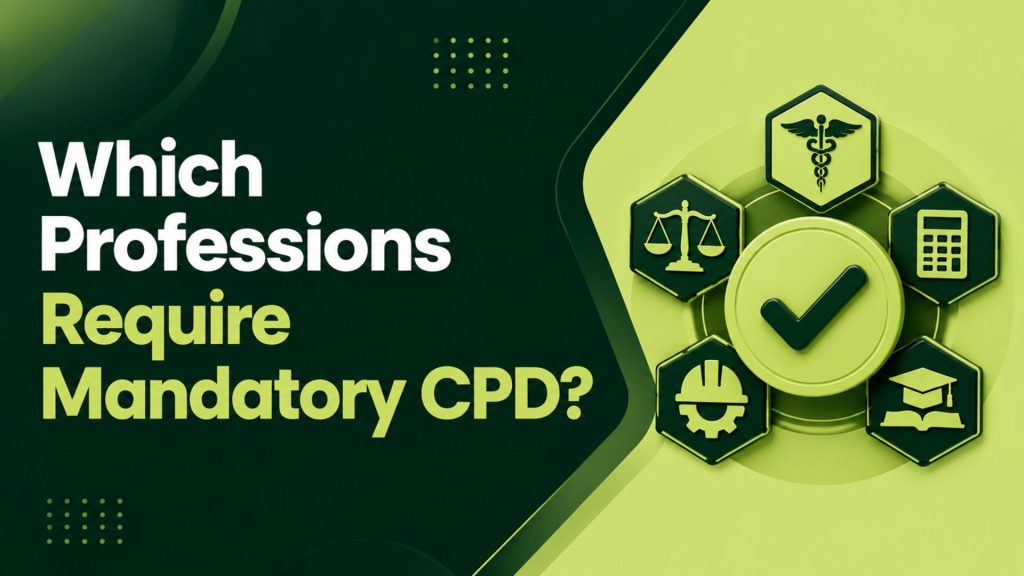
Many regulated professions have formal CPD obligations.
Doctors, nurses, pharmacists, dentists, and allied health professionals are typically required to complete CPD to maintain registration and demonstrate ongoing competence.
CPD helps healthcare practitioners stay informed about:
Solicitors, barristers, and other legal practitioners often have CPD requirements imposed by their regulatory bodies.
Legal CPD commonly covers:
Accountants, auditors, financial advisers, and tax professionals frequently need CPD to maintain professional designations and ensure compliance with evolving financial regulations.
Many chartered and incorporated engineers undertake mandatory CPD to maintain professional standing and demonstrate technical competence.
Teachers, lecturers, and academic professionals often participate in ongoing development programmes to improve teaching effectiveness and stay current with curriculum changes.
CPD is also commonly required or strongly encouraged in:
Even when not formally required, CPD is increasingly viewed as an essential component of professional practice.
CPD matters because professional knowledge does not stand still.
New regulations, emerging technologies, evolving industry standards, and changing client expectations mean that professionals must continually develop their expertise.
Some of the key benefits of CPD include:
Regular learning ensures professionals remain informed about current developments and best practices within their industry.
Employers often view CPD as evidence of commitment, ambition, and professional growth. It can strengthen promotion prospects and support career advancement.
CPD shows employers, clients, regulators, and professional bodies that an individual takes responsibility for maintaining their competence.
Learning new skills and expanding knowledge can increase confidence when tackling complex challenges or taking on greater responsibilities.
Professionals who actively engage in CPD demonstrate a commitment to high standards, helping build trust and credibility.
A common misconception is that CPD only involves attending training courses.
In reality, CPD can include a wide range of learning activities.
Structured learning programmes with defined outcomes, such as:
Self-directed learning and workplace development, including:
The most effective CPD programmes often combine both formal and informal learning experiences.
No.
CPD and CPD accreditation are related but different concepts.
CPD refers to the learning and development activities undertaken by professionals.
CPD accreditation refers to an independent assessment process that verifies whether a training course, event, or learning programme meets recognised CPD standards.
Accreditation provides reassurance that the learning activity:
For professionals, accredited learning can make it easier to demonstrate compliance with CPD obligations and gain recognition from professional bodies.
Where CPD is mandatory, failing to meet requirements can have serious consequences.
Depending on the profession, these may include:
Requirements vary significantly between professions, so it is important to check the specific CPD rules set by your professional body or regulator.
If CPD is mandatory in your profession, consider the following best practices:
Identify skills, knowledge gaps, and professional goals at the beginning of each year.
Maintain a log of:
Focus on CPD activities that directly support your role, responsibilities, and career objectives.
Avoid leaving CPD until the last minute by tracking progress throughout the year.
Accredited programmes can provide greater confidence that your learning will meet professional expectations.
Not always. CPD is legally or professionally required in some regulated professions, while in others it is voluntary but strongly encouraged.
The required number of CPD hours varies by profession, regulator, and membership level. Always check the requirements of your professional body.
Yes. Many online courses, webinars, and e-learning programmes can count toward CPD requirements if they contribute to professional development.
No. While many regulated professions require CPD, professionals across all industries can benefit from continuous learning and development.
CPD is an essential part of maintaining professional competence and supporting long-term career growth. While CPD is mandatory in many regulated professions, its importance extends far beyond compliance.
Whether you work in healthcare, law, finance, engineering, education, or another sector, ongoing professional development helps you stay relevant, improve performance, and demonstrate commitment to excellence.
If you’re unsure whether CPD is mandatory in your profession, consult your professional body or regulator. Understanding the requirements early can help you remain compliant while making the most of your professional development opportunities.

Jordan Henderson is a well-known writer and CPD research analyst with extensive experience creating insightful content on professional development, workplace learning, leadership, compliance, and skills development.